
Alcohol is one of the fundamental elements in beer, serving as both a byproduct of its creation and a primary driver of its character. When exploring high-gravity styles such as Imperial Stouts, Doppelbocks, or Barleywines, the expression of this alcohol varies dramatically between masterpieces and more abrasive examples.
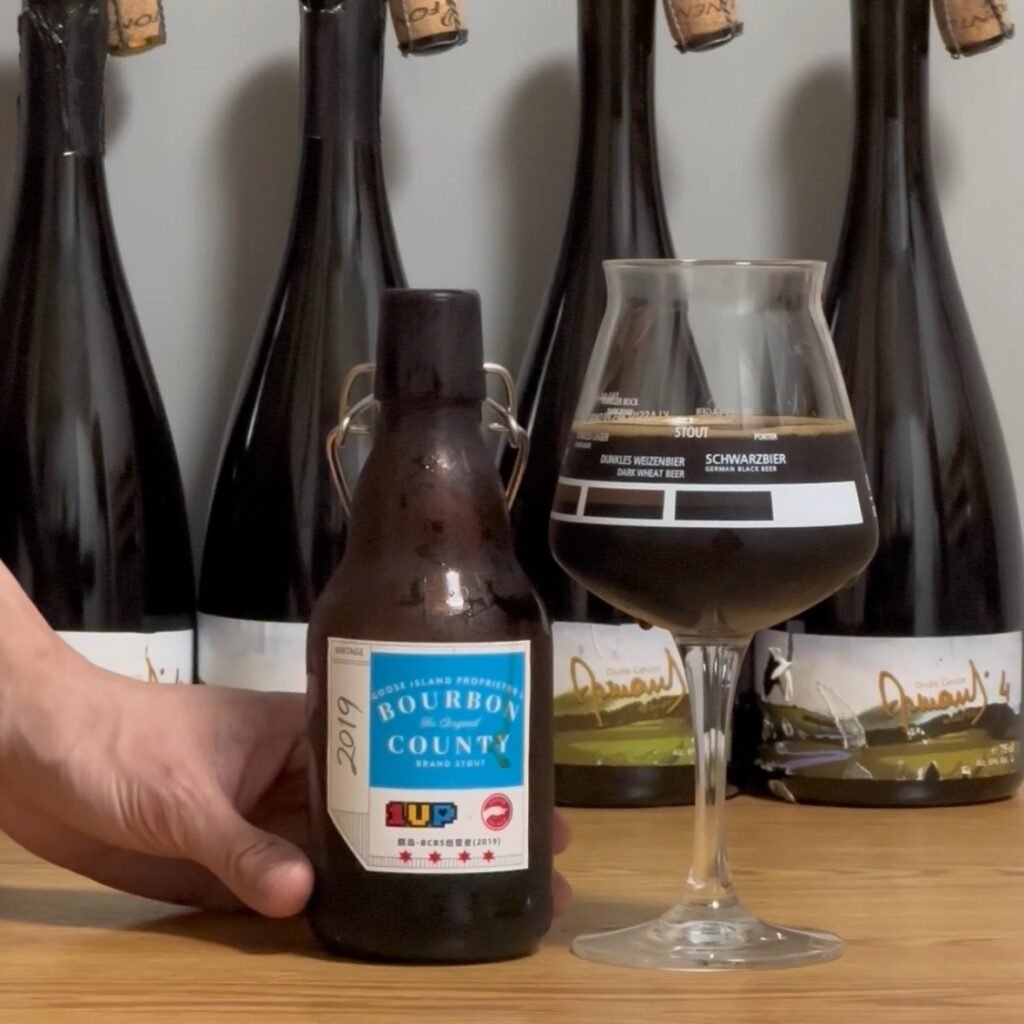
In some beers, the alcohol is often described as “hidden” or “integrated,” where it manifests solely as a gentle, creeping warmth in the chest or a soft, velvety glow on the back of the throat. Conversely, in less balanced versions, the alcohol can become a primary flaw, asserting itself through a sharp, “hot” sensation that stings the palate and leaves a harsh, solvent-like burn that disrupts the beer’s complex profiles and quickly fatigues the palate.
In beer, the main alcohol is ethanol, produced during fermentation when yeast metabolises fermentable sugars from the wort into alcohol and carbon dioxide via glycolysis and subsequent alcoholic fermentation. While ethanol is essentially odorless in low concentrations, in the context of beer, it contributes a subtle, sweet, and floral aroma. Beyond smell, ethanol is a critical structural component; it adds “body” or viscosity to the liquid, contributing to a richer mouthfeel. It also acts as a flavor enhancer by increasing the volatility of hop oils and ester compounds, effectively “lifting” the beer’s aroma toward the drinker’s nose.
The perception of ethanol follows a distinct progression as concentration increases. At the initial level of taste detection (around 1.4% by volume), it is often perceived as a subtle bitterness or a slight sweetness. As it moves toward recognition (3% to 4.2% by volume), the brain more frequently recognizes the compound as sweetness, which explains why many standard-strength beers have a perceived malt “finish.” However, as concentrations reach oral irritation (around 8% by volume), the bitterness peaks and the physical sensation of “warming” or drying begins to dominate the palate.
However, “alcohol” in beer is rarely limited to ethanol alone. Brewers group a family of other compounds under the umbrella of “alcoholic” notes, most importantly the higher or fusel alcohols. These include compounds such as n-propanol, which introduces a musty, alcohol-like scent at a threshold of approximately 0.075% by volume, and isobutanol, which brings a grainy, solvent-like edge when it exceeds roughly 0.012% by volume. Perhaps most prominent is isoamyl alcohol; while it contributes a familiar banana or vinous aroma, at levels above a mere 0.006% to 0.009% by volume, it turns whisky-like, harshly alcoholic or fusel notes.
These chemicals are formed via the Ehrlich pathway, where yeast metabolizes amino acids instead of sugars. Unlike the clean profile of ethanol, an excess of these higher alcohols results in the aggressive, burnt, and “rocket fuel” sensations often found in poorly managed fermentations. Additionally, if beer is exposed to oxygen, ethanol can oxidize into acetaldehyde and further into acetic acid, or even combine with other elements to create harsh, solvent-y esters that amplify the perception of heat.
The chemical data of these alcohols doesn’t tell the whole story, there is a parallel chapter written by human perception. Ethanol and fusel alcohols share some chemosensory pathways but produce noticeably different sensations, interplay between the gustatory, olfactory, and somatosensory systems.
Ethanol is unique because it is perceived not just as a flavor, but as a physical sensation mediated by the trigeminal nerve and specific heat-sensing receptors known as TRPV1. When we drink beer, ethanol lowers the activation threshold of these TRPV1 receptors, making them “fire” at normal body temperature, which creates the characteristic soft, “warming” sensation.
In contrast, higher fusel alcohols have a different molecular structure that causes more aggressive irritation to the mucous membranes. These larger molecules don’t just trigger warmth; they cause a localized inflammatory-like response that the brain interprets as “harsh” or “stinging.” Because these heavier alcohols have higher boiling points and different solubility, they linger longer on the pain receptors of the throat, turning a gentle glow into a jagged, “hot” finish that marks the difference between a sophisticated sipper and a boozy, unbalanced brew.
To reduce these harsh fusel alcohols, brewers focus on keeping the yeast unstressed. The most important step is controlling temperature; cooler fermentation prevents the yeast from working too fast and creating “hot” flavors. Brewers also “pitch” a high amount of healthy yeast so the cells aren’t overwhelmed by high sugar levels. Finally, providing plenty of oxygen and nutrients like zinc helps the yeast build strong cells, allowing them to focus on creating clean ethanol rather than the sharp, stinging alcohols that ruin a beer’s balance.
Beyond the initial brewing stage, the aging process, particularly in wooden barrels, plays a transformative role in smoothing out these alcoholic sensations over time. Through a process known as micro-oxygenation, minute amounts of oxygen permeate the wood staves, allowing for a slow, controlled oxidation that rounds off the jagged edges of fusel alcohols.
These harsh compounds often undergo esterification, reacting with organic acids to form fruity, pleasant esters, or they may simply evaporate through the wood in what is known as the “angel’s share.” Simultaneously, the extraction of wood compounds like vanillin and tannins provides a structural “cushion” that masks the heat, while the slow concentration of the beer’s body via evaporation increases the viscosity.
Ultimately, a truly well-made beer demonstrates that the “alcoholic” quality is not just a measure of strength, but a sophisticated interplay of chemistry and craft that determines whether a beer warms the soul or simply burns the palate.