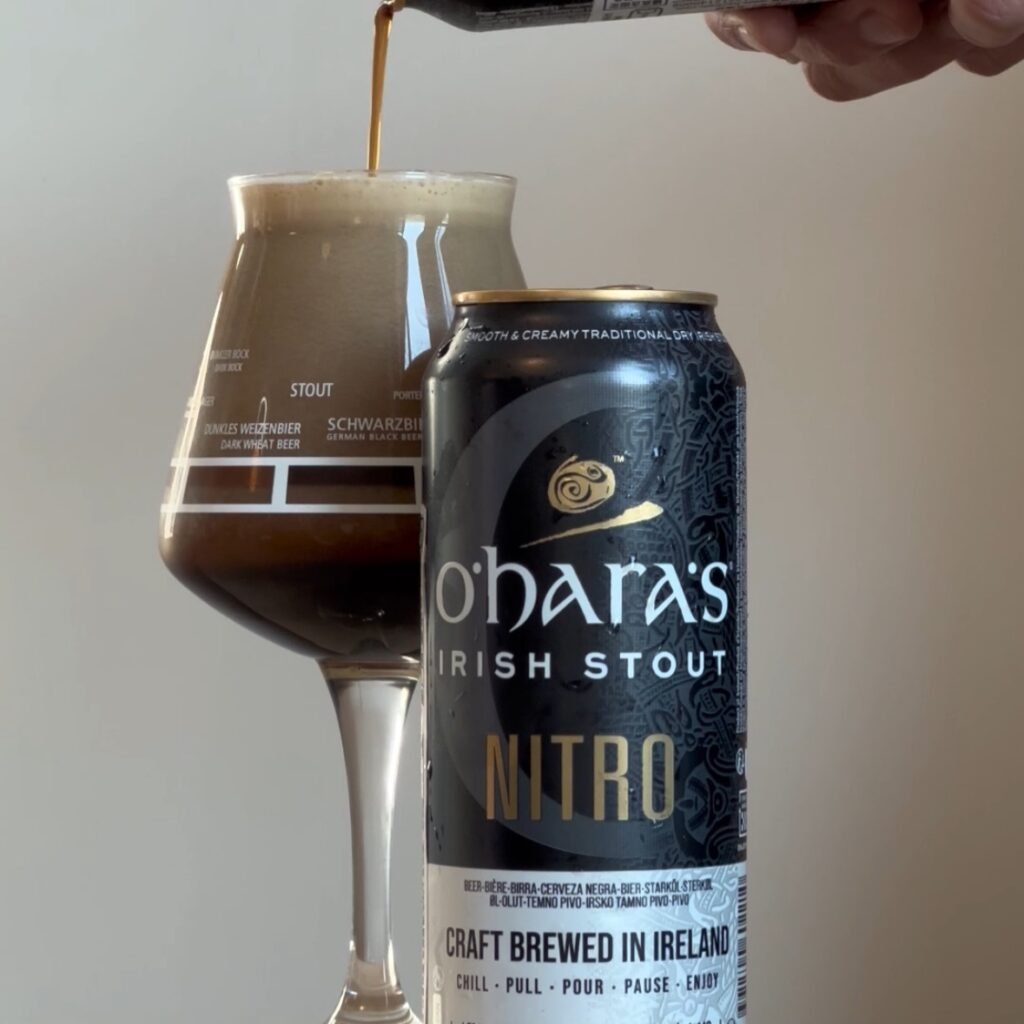
Today, I find myself treasuring a regular, year-round beer far more than the fleeting thrill of a new, one-time brew.
Looking back at the early stages of my beer journey, I was constantly chasing new releases from breweries, always looking forward to novel flavours and the twists of experimental hops.
Has my palate changed simply because I am getting older, or is it just as beer snobs always claim: that once you drink enough double IPAs and barrel-aged imperial stouts, you inevitably return to so-called boring lagers?
Perhaps so. While seasonal releases capture attention with experimental novelties and loud ingredient additions, standard flagship beers represent an arduous journey of sensory engineering.
Many drinkers take these regular offerings for granted or dismiss them as plain and predictable. Yet for me, achieving and maintaining that optimal equilibrium requires an immense amount of technical discipline from the brewer; calibrating a delicate recipe where every single component exists in seamless, repeatable harmony remains one of the hardest feats in brewing.
In the realm of beer flavour and sensory evaluation, equilibrium is the precise point where volatile aromatics, gustatory tastes, and trigeminal mouthfeel sensations balance so completely that no individual element overpowers the palate.
Flavour equilibrium occurs when residual sweet carbohydrates, bitter hop iso-alpha-acids, organic fermentation acids, dissolved carbon dioxide, and volatile esters or terpenes actively support and counterbalance one another, creating an impression of absolute cohesion and drinkability.
It looks deceptively simple on the surface, yet there are numerous variables a brewer must fine-tune to reach this optimal balance. From an ingredient perspective, it requires the right grist formulation, an optimal hop schedule and dosage, a healthy pitch of viable yeast, and a dialed-in water chemistry profile to make every component shine.
Beyond raw ingredients, process precision is what allows a brewer to hit target specifications consistently, serving as the true hallmark of technical mastery in the brewhouse.
Flavour operates as a dynamic, interconnected matrix rather than a set of independent adjustments.
When a brewer adjusts a single core component, such as reducing residual sweetness, that equilibrium does not simply shift slightly along a linear spectrum; it fundamentally collapses and reconstructs into an entirely new sensory state.
Removing sweetness does not simply strip sugar away from the background; it radically reframes the way every surviving aromatic volatile and bitter acid interacts with human receptors, forcing the entire recipe into a completely different sensory framework and effectively turning it into an entirely different beer.
To systematically reduce sweetness in beer, a brewer can target two distinct fronts: either physically decreasing the concentration of residual unfermented carbohydrates to strip away true sweetness, or engineering sensory counterweights to actively suppress perceived sweetness. Yet each of these approaches reshapes the entire flavour profile rather than simply dialing down sugar levels.
In the brewhouse, even without altering the proportions of the grist, adjusting the mashing process itself is one of the most effective ways to lower sweetness.
The mash is where the brewer controls how much starch converts into fermentable simple sugars versus unfermentable, body-building dextrins. By lowering the mash temperature into the beta-amylase sweet spot, extending the rest duration, or dosing exogenous enzymes like glucoamylase, the brewer increases the proportion of simple sugars available for the yeast to consume, attenuating the beer further and lowering terminal sweetness.
However, these enzymatic adjustments do not just reduce sweetness; they also deplete body and mouthfeel, which drastically alters how flavour compounds are delivered and registered on the palate.
In a full-bodied beer like an Imperial Stout, long-chain dextrins and polysaccharides form weak hydrophobic interactions with hop oils and higher alcohols, slowing their release and allowing flavours to unfold in layered stages over time. When those dextrins are stripped out, this molecular scaffolding vanishes, causing volatile aroma compounds to flash off rapidly upon contacting oral warmth. The result is an intense, front-loaded burst of aroma on the initial sip, but those flavours clear almost immediately upon swallowing, producing a beer with an abruptly truncated finish.
Furthermore, dextrins naturally coat the oral mucosa and buffer the interaction between polyphenols and salivary proline-rich proteins. Without that protective barrier, grain and hop polyphenols precipitate salivary proteins unchecked, dramatically increasing tactile friction and leaving the mouth feeling raspy, chalky, and puckeringly dry.
Converting unfermentable dextrins into fermentable sugars simultaneously raises the beer’s alcohol by volume, introducing substantial changes driven by ethanol’s multimodal sensory properties.
While ethanol contributes a faint perceived sweetness at low concentrations, higher alcohol levels stimulate the trigeminal nerve’s TRPV1 receptors, the same pathways responsible for sensing physical heat and capsaicin. Without residual carbohydrates to coat the oral mucous membranes and cushion this nerve response, ethanol warmth transforms into a sharp, solvent-like burn that disrupts delicate background notes.
Ethanol also functions as a co-solvent that alters volatile partitioning. As its concentration rises, it increases the solubility of non-polar hop sesquiterpenes like humulene and caryophyllene, inadvertently trapping certain earthy and resinous aromas within the liquid phase while driving more polar compounds into the headspace. At the same time, elevated ethanol decreases oral hydration and alters mucosal permeability, which heightens the sensitivity of TAS2R bitter taste receptors and causes hop bitterness to finish with an aggressive, medicinal edge that lingers long after the liquid is gone.
Moreover, this biochemical transformation culminates in a fascinating sensory paradox between sweet tastes and sweet aromas. From the perspective of human perception, stripping away true sweetness triggers major sensory distortions driven by cross-modal interactions and flavour-taste congruency.
An abundance of fermentable sugars fuels yeast metabolism, which can accelerate the synthesis of fruity esters like isoamyl acetate and ethyl hexanoate. Because the human brain has evolved to link the aromas of ripe banana, red apple, and juicy stone fruit with sugar-rich nourishment, these retronasal volatiles trigger odour-induced taste enhancement, leading the drinker to anticipate an illusion of sweetness.
Beyond mashing parameters, altering the grist formulation, selecting different yeast strains, or adjusting fermentation kinetics will likewise reduce residual sweetness, but each lever inevitably steers the beer into an entirely different flavour territory.
Even a minor twist can transform a beer into an entirely different narrative. That is why I have learned to treasure those beers that appear deceptively simple, balanced, or even boring at first glance; it takes an extraordinary amount of time, discipline, and technical mastery to achieve that quiet level of equilibrium.