Thank you for the invitation to speak at CBCE 2026 in Shanghai regarding Brand Growth early this week.
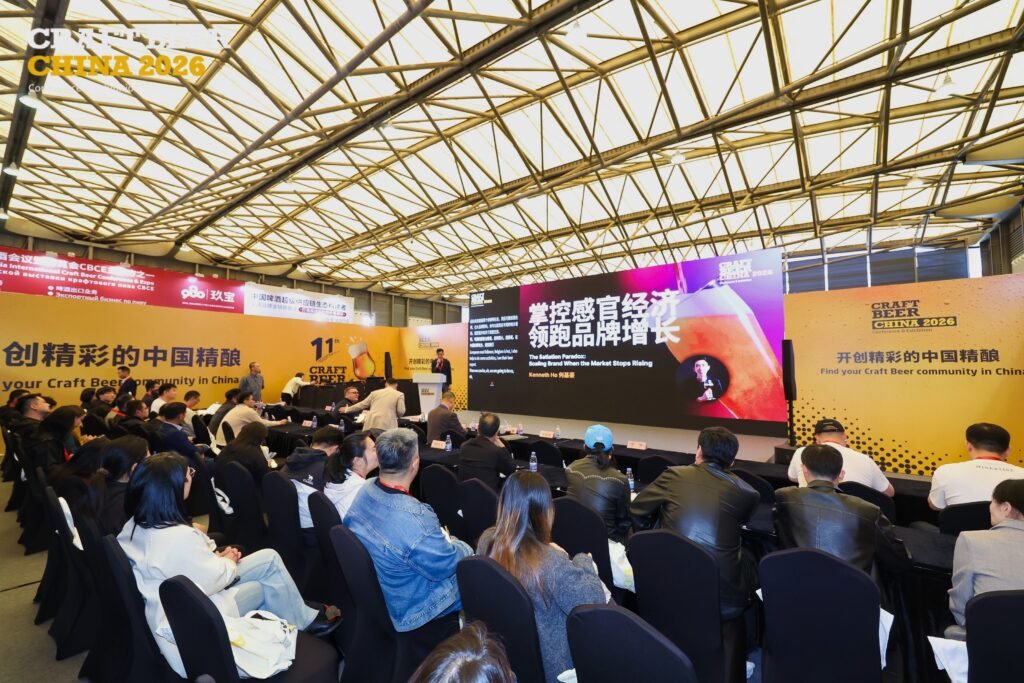
There’s a rapid growth in China’s craft beer scene featuring sweet ciders, meads & fruited beers, however the market had an issue of lacking of differentiation. The topic advocates a back to basics strategy, focusing on defining a unique brand identity and core growth engines.
Below is a summary of the topics discussed during the session:
Today, beer brands of every scale, from multinational conglomerates to local startups, are caught in a relentless cycle of reactive trend following.
On the global stage, the explosion of non-alcoholic options and the “Sober Curious” movement has become the new industry gospel. In China, we see a parallel shift as mass-market giants aggressively pivot into the craft segment. Everyone is playing the same tune, chasing the same “Hazy” or “Tea-infused” hype in hopes of achieving identical results.
However, this “safety in numbers” is a strategic illusion. When a brand’s entire strategy is built on chasing the current zeitgeist, it sacrifices its unique identity for a temporary seat at an overcrowded table.
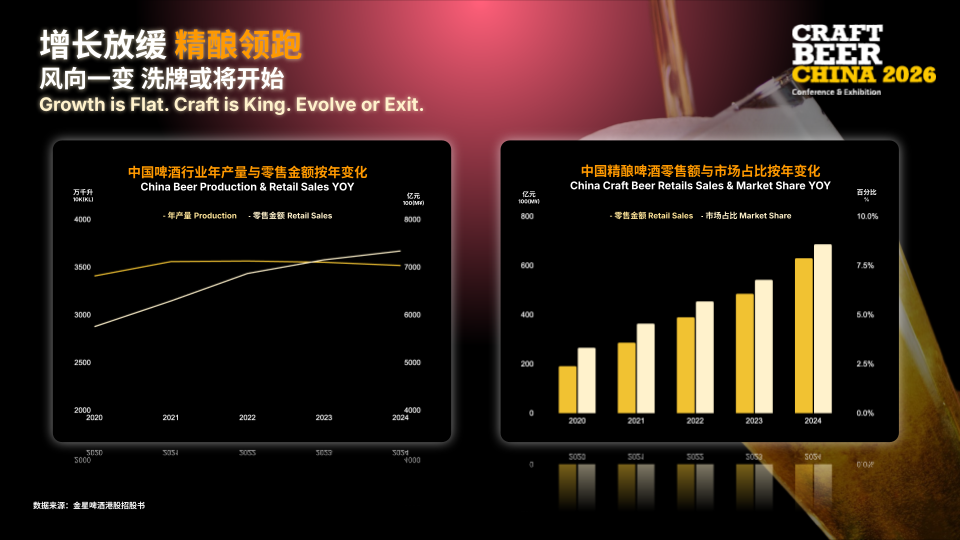
The data tells a story of two different realities. Since the 2013 peak, China domestic beer production has plummeted by nearly 30%, creating a massive “Volume Crater”. Yet, the industry has managed to stay afloat through a radical pivot. By shifting focus from mass-market lagers to craft and premium and craft segments, brands have successfully traded quantity for quality. Total retail value continues to climb, even as the actual liquid produced continues to vanish.
This “Craft Gold Rush” is currently the engine of the industry. With craft beer share hitting roughly 10% and revenue growth exploding at 20–30% annually, it feels like a party that will never end.
However, as strategists, we must look past the current high. No category maintains double-digit growth forever. We are approaching a structural ceiling where the premiumization trend will inevitably cool. When that growth engine stalls, the market will shift from a “Gold Rush” to a “Survival of the Fittest” shakeout.
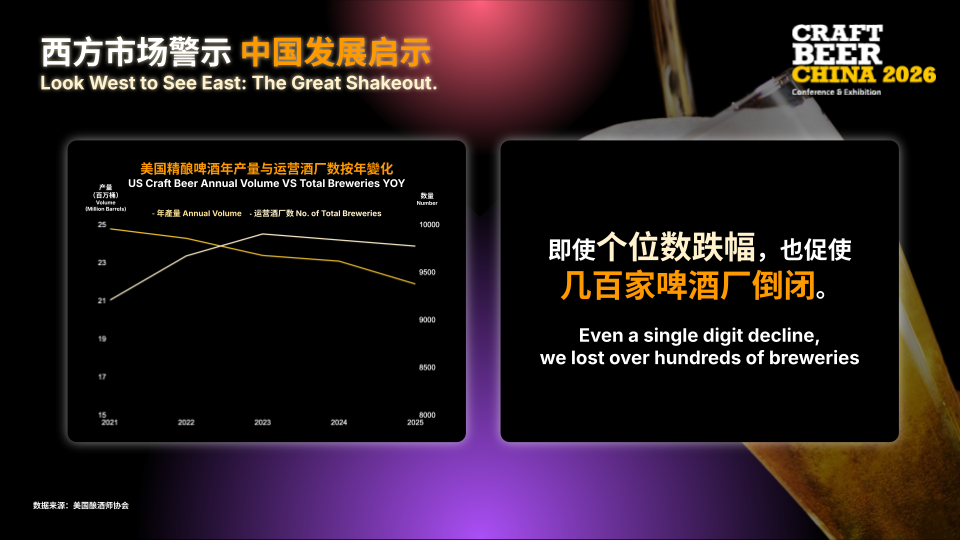
To understand where we are going, we could look at the world’s most mature craft ecosystem: the United States. The data reveals a sobering preview of the “Great Shakeout”. After a decade of explosive growth, US craft production hit its ceiling in 2021 and has since entered a period of cooling and contraction. But the real warning isn’t in the liquid—it’s in the labels.
The number of active breweries finally peaked in 2023 and has since begun a sharp, painful descent. In just a few years, hundreds of breweries have closed their doors. This isn’t a localized downturn; it is the natural lifecycle of a saturated market. When the “Gold Rush” ends and the growth curve flattens, the market stops rewarding everyone and starts punishing the unprepared. This is the global momentum, and China is squarely in the crosshairs.
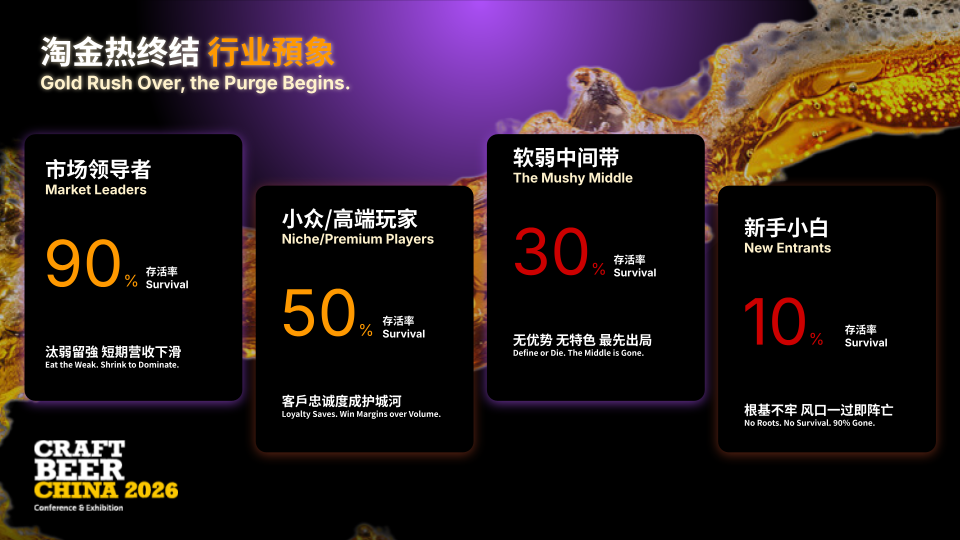
When the “Gold Rush” ends and the easy money vanishes, the market performs a brutal act of pruning. Lessons from other mature categories tell us that survival is not distributed equally. The Market Leaders “the top tier” rarely just survive; they consolidate. Armed with deep capital and operational scale, they stay alive by swallowing smaller competitors and vacuuming up the remaining market share. We have already seen this global blueprint play out with international giants; they don’t fear the crash, they use it to expand their empires.
For the Niche Premium players, the future is a coin flip. While they have a roughly 50% survival rate, they are often living on “borrowed time”, kept afloat solely by a hardcore base of loyalists. But loyalty is a lifeline, not an engine. Relying strictly on a legacy fanbase without attracting new blood is a slow-motion exit.
The real carnage, however, is reserved for the “Mushy Middle.” This is the ultimate death zone for new entrants and brands with vague positioning. Without a distinct brand soul, significant capital, or the power to dictate terms, these brands are the first to be erased. In the 2026 market, being “okay” or “new” isn’t a strategy, it’s a target on your back.
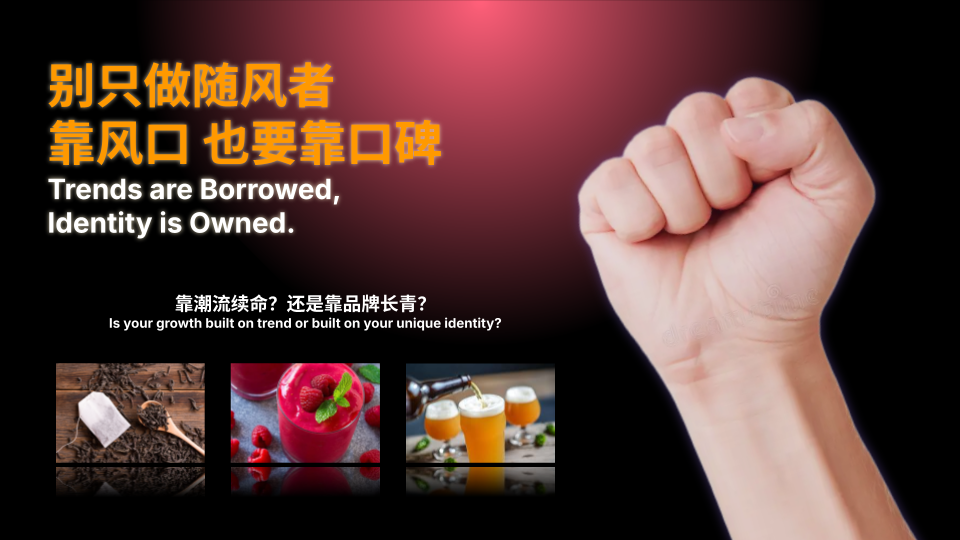
The true test of a strategist isn’t how they perform during a gold rush, but how they prepare for the storm. When the “wind” of the market begins to drop, most brands—those that were simply gliding on the updraft of a trend—will fall. To go upward when the market is going down requires a different kind of power. It requires an engine, not just a sail.
Look at the current portfolios. Are you building a brand, or are you just a factory for the “flavor of the month”? Whether it’s Wheat, NEIPAs, Smoothie Sours, or the current rush toward Tea Beers and Rice Lagers, everyone is brewing the same liquid. If we removed your labels tomorrow, would your brand survive? If your identity is tied only to a trend, you are a commodity. And in 2026, commodities are the first to be crushed. This brings us to the core of our session: How to stop following the wind and start becoming the storm.
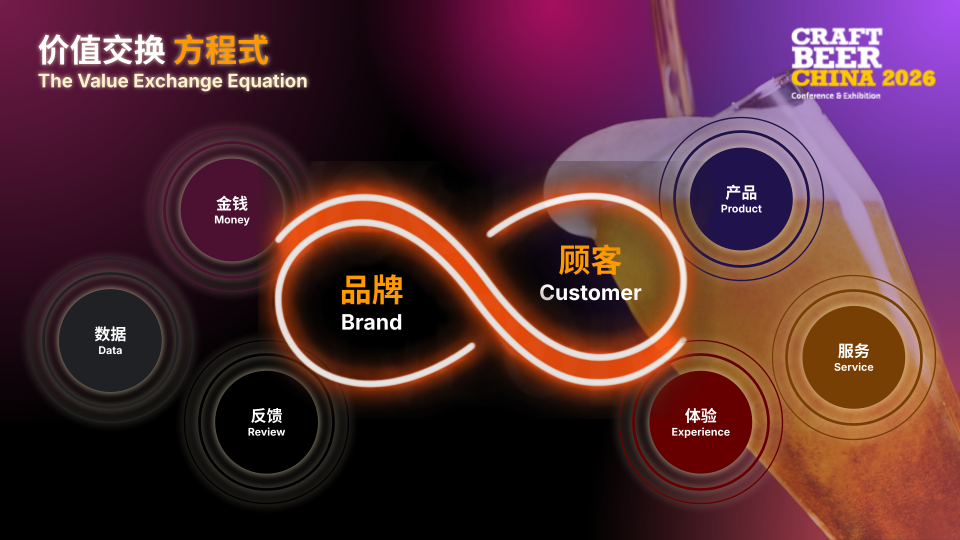
In the 2026 market, brand trust & identity is no longer a “nice-to-have” metric, it is your only defence against commodity status.
To form a deep, unbreakable bond with your audience, you must move beyond the simple transaction of “money for beer”. You must master the Value Exchange. This is the invisible layer of your brand: the thoughtfulness of your service, the friction-less nature of your experience, and the emotional resonance of your story. If your product is the body, your value exchange is the soul.
True brand intelligence means listening to the human, not just the data point. Are you using your consumer feedback to truly understand their lives, or are you just counting their revenue? In a world of infinite choice, the brands that win are those that treat a negative review not as a PR threat to be suppressed, but as a free strategic audit. Turning a critic into a collaborator is the highest form of brand growth.
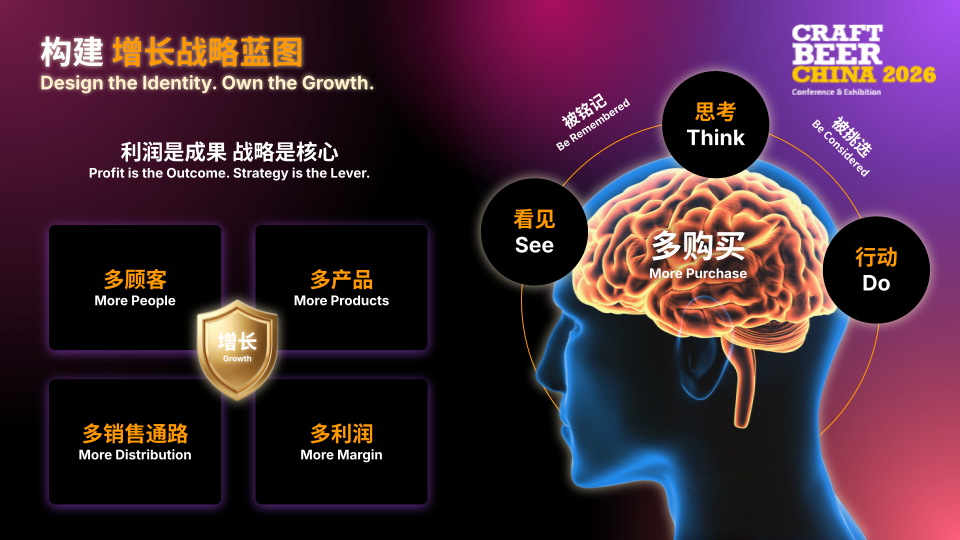
Once you have codified your brand identity and mastered the value exchange, you move from the “Why” to the “How.” This is where you build your Growth Blueprint. Our fundamental objective is clear: we want more people buying more of our beer, more often. However, “growth” is not a vague hope; it is a tactical sequence. It begins by mapping the friction-less path from Awareness (Seeing us) to Consideration (Thinking of us) to Conversion (Buying us).
Strategic growth is an exercise in ruthless focus. You cannot pull every lever at once and expect results. To win, you must define exactly where your next dollar is coming from. Are you expanding your territory to reach New Audiences? Are you Upselling your current customers into premium tiers? Are you breaking through into New Distribution Channels? Or are you Optimizing the Machine, cutting internal waste to harvest higher margins? Clarity on the “Where” is the only way to ensure the “How” actually succeeds.
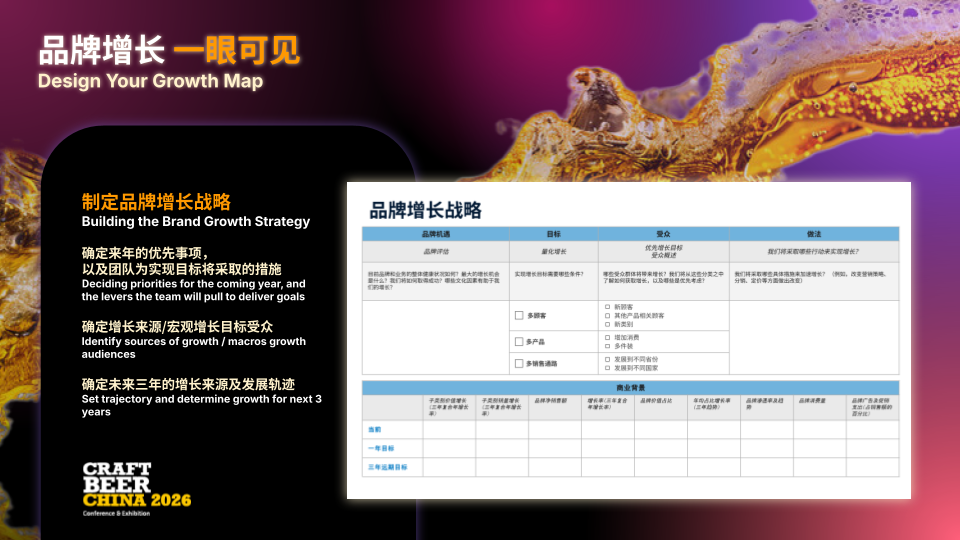
Once your growth direction is clear, the challenge shifts from “thinking” to “distilling.” High-level concepts must be translated into a functional Growth Plan, a single, tactical blueprint that fits on one page. This “Strategy Stack” is designed to strip away the noise and force a brutal look at your current brand positioning, the specific obstacles standing in your way, and the high-leverage areas where you must focus your energy. If it can’t be communicated in a single view, it isn’t a strategy yet, it’s just a list of wishes.
This distillation is a critical step because a strategy is only as good as the team that executes it. By condensing your 3-to-5-year vision into a shared “Source of Truth,” you stop being the only person holding the map. You translate your personal ambition into a Collective Consensus, ensuring that every person in your organization, from the brewmaster to the sales rep, understands exactly what the brand looks like in the future and precisely what role they play in getting it there.
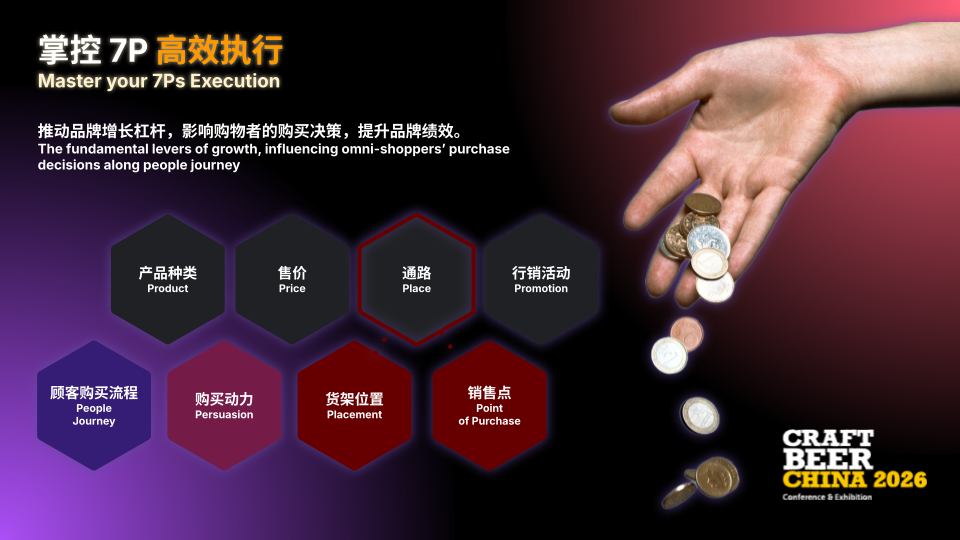
With your Growth Plan locked in, the next phase is the transition from paper to pavement: the Go-To-Market (GTM) Blueprint. We move beyond the “checklist” approach of traditional 4P strategy. Instead, we use your Brand Identity as a lens to curate a surgical market entry. By aligning your product assortment, pricing tiers, and promotional timing with your specific growth areas, you create a strategic shield. This level of clarity acts as a high-pass filter, allowing you to ignore competitor distractions and market noise that don’t serve your ultimate objective.
Precision execution is about mastering the “Where” and the “Which.” It’s the art of knowing exactly which shelf your brand belongs on, how it should be presented, and which specific SKUs must lead the charge to drive volume or build equity. However, in the 2026 landscape, placement isn’t enough. We must integrate the Consumer Journey and Psychological Triggers into our execution, understanding not just where the customer is, but the specific “Moments of Truth” that drive them to purchase.
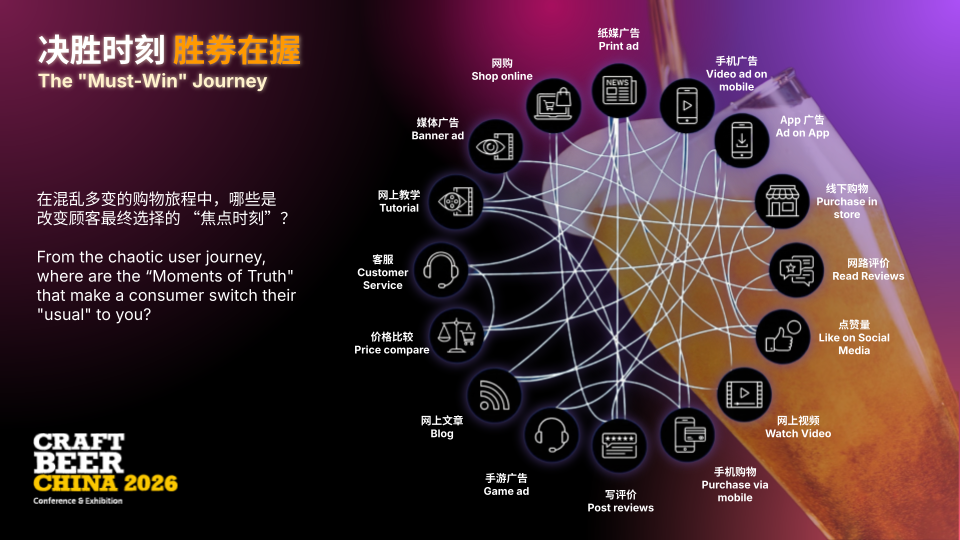
The modern consumer journey is no longer a straight line; it is a chaotic web of digital and physical touchpoints. In this environment, the “spray and pray” approach to advertising is dead. No brand has the infinite budget or time required to be everywhere at once. To survive, you must abandon the quest for total presence and instead identify your “Must-Win Moments”, those specific intersections where a consumer’s interest actually crystallizes into purchase intent.
Winning in 2026 requires a ruthless pivot away from “Ego Marketing”. It is easy to spend money on platforms that you personally enjoy or that feel “comfortable” for your team, but comfort is rarely profitable. You must look past the noise and focus exclusively on the platforms that objectively command consumer attention and drive decisions. If a platform doesn’t have the power to move your consumer’s needle, it doesn’t deserve a single dollar of your budget, no matter how popular it might be.
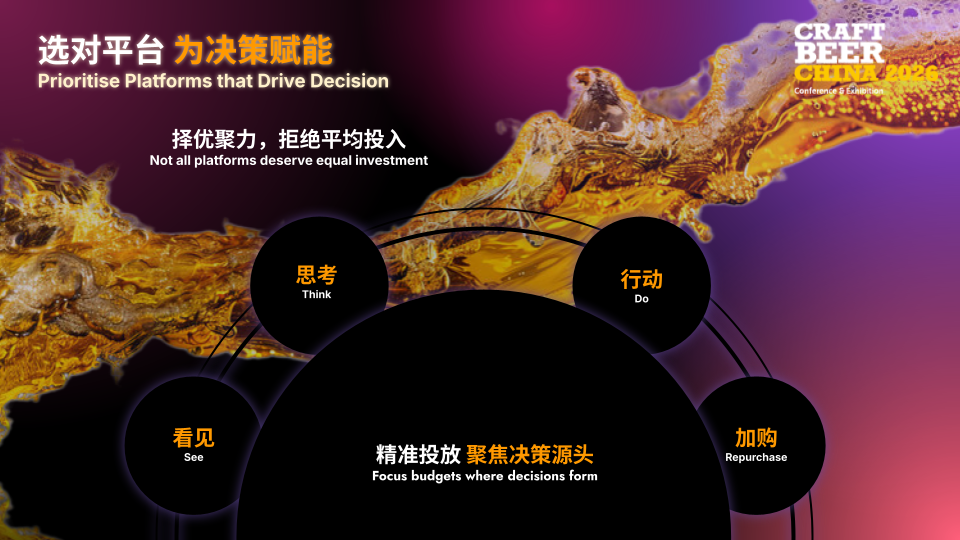
In a fragmented market, your energy is your most valuable currency. To spend it wisely, you must identify the exact platforms where your consumer’s choice is actually made. It isn’t enough for them to simply “see” your brand; you must understand the Decision Architecture of your specific audience. Are they discovering your liquid through the high-trust lens of a peer recommendation, or are they being swayed by the aesthetic authority of a professional creator? Knowing the difference determines whether you invest in community building or high-impact media.
The path doesn’t end at influence, it must lead to a frictionless transaction. You must have total clarity on where your customers buy and, more importantly, whether they are clear on how to find you. Finally, we look beyond the first sale to the Retention Loop. True growth isn’t just about the initial capture; it’s about identifying which platforms and strategies create the highest “Social Stickiness.” We aren’t just looking for a platform that drives a click; we are looking for the ecosystem that builds a habit.
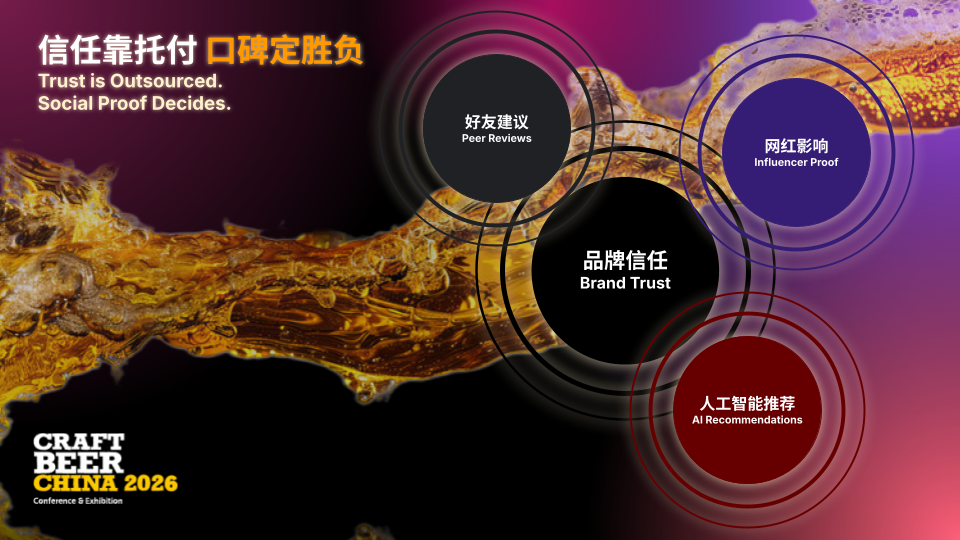
We have entered a period where the individual consumer has effectively “outsourced” their intuition.
In the 2026 landscape, the risk of a “bad purchase” is culturally unacceptable. Before a consumer ever touches your product, they engage in a complex ritual of external validation. They aren’t just looking at your ad; they are consulting their inner circle, scanning Untapped for peer reviews, weighing the opinions of niche influencers, and increasingly asking their generative AI to filter the truth from the marketing hype.
The era of “trying something new” on a whim is over. People no longer trust their own eyes; they trust the collective data of the network. There is a vast, external “Source of Truth” living in the cloud and in the community, and it is more powerful than any campaign you can buy. The question for your boardroom is no longer “What is our message?” but rather: “Is our brand digitally and socially credible enough to survive the audit of an AI and the scrutiny of a peer?”
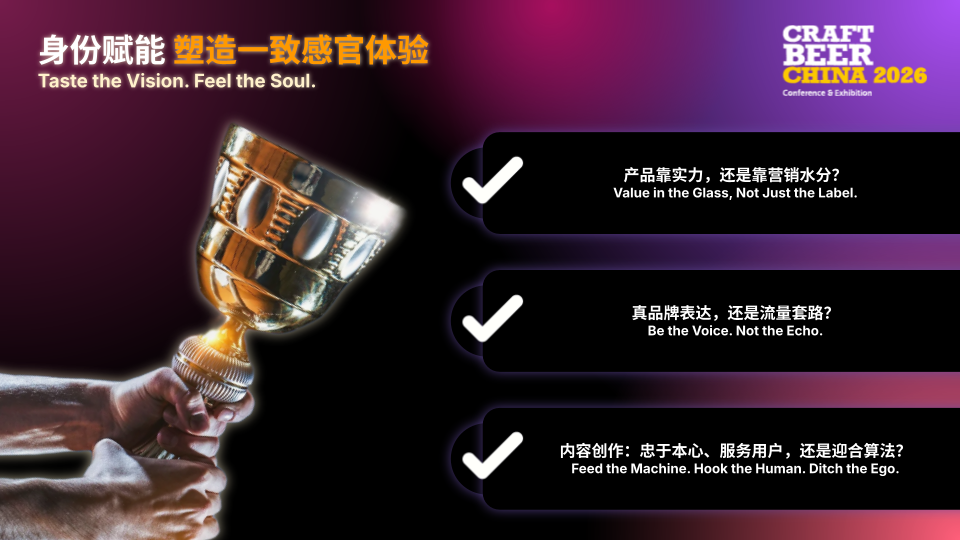
Every piece of communication you release is a test of your brand’s integrity. At the Product Level, you must ask the brutal question: Does the beer in the glass justify the price on the tag, or are you simply selling “Marketing Liquid”? In a market as educated as 2026, packaging can win the first trial, but only quality wins the continuous purchase. If your marketing is more premium than your product, you aren’t building a brand, you’re building a disappointment.
This integrity extends to your Voice and Tone. Authentic communication is the hallmark of a market leader; trend-chasing is the hallmark of a follower. If your brand sounds like a carbon copy of every viral meme, you are sacrificing your unique soul for a few seconds of relevance. Similarly, when Creating Content, you must distinguish between “Personal Ego” and “Brand Identity”. Are you producing content because it serves the brand’s strategic pillars, or simply because it satisfies a personal hobby?
Finally, we must address the 51% Rule. In 2026, over half of all digital traffic and content consumption is driven by non-human agents. While you are busy trying to impress a human drinker, you must ask: Is our brand data-structure legible to an AI? If AI cannot parse your value proposition or index your brand’s unique attributes, you are invisible to the algorithms that now control the majority of consumer discovery.
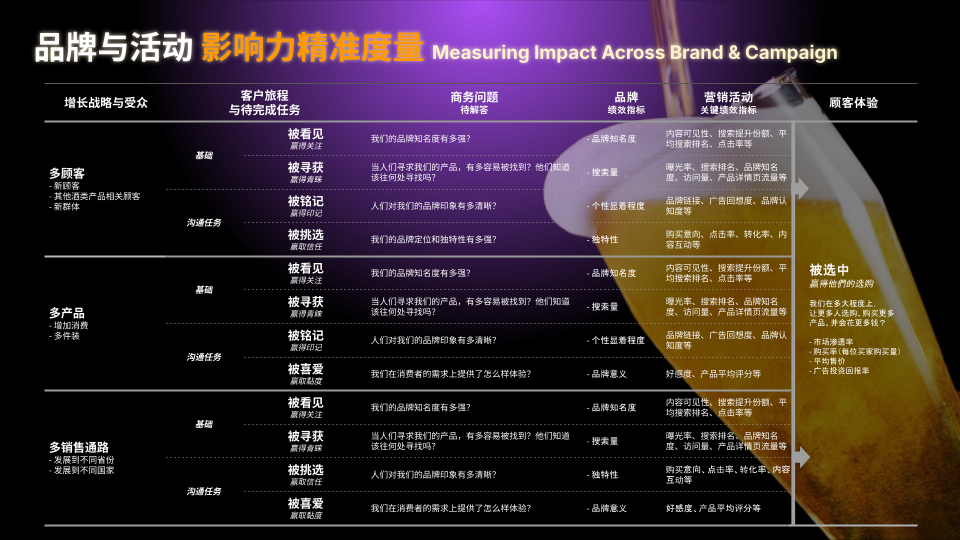
Once your brand positioning is solidified and your growth blueprint is active, the real work begins. Many brands make the fatal mistake of treating “Sales” as their only metric. But in a mature market, sales are a lagging indicator, they tell you where you were, not where you are going. To build a resilient brand, you must implement a nervous system of KPIs that monitor every critical node of your strategy. You need to see the friction before it kills the conversion.
The secret to 2026 market dominance isn’t launching a “perfect” campaign; it’s mastering the art of the Pivot. We don’t aim for flawless execution on day one; we aim for Data-Driven Agility. By monitoring every touchpoint in real-time, we turn our strategy into a living breathing machine. We launch, we measure, we optimize, and we repeat. In this landscape, the brand that learns the fastest is the brand that wins the longest.
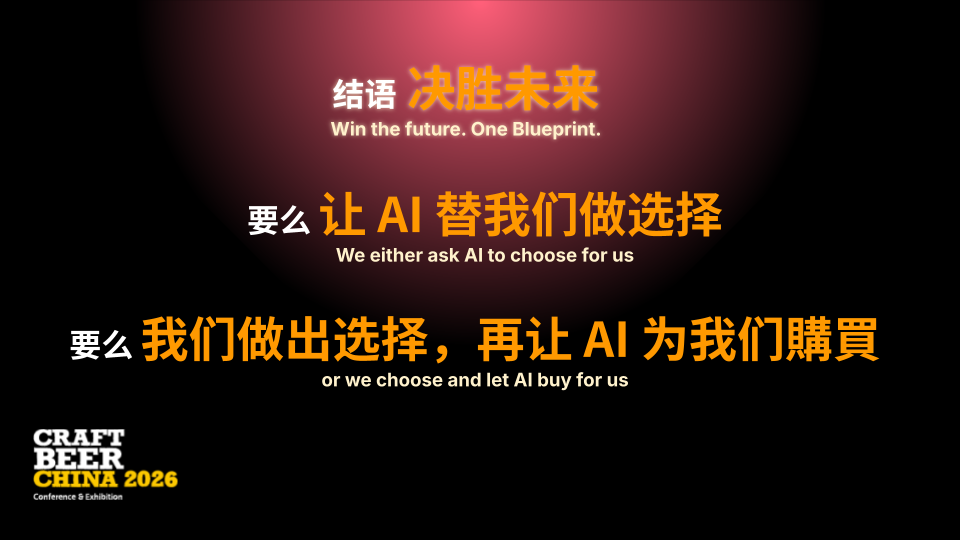
To win the next five years, we must stop obsessing over where the consumer is today and start building for how they will buy tomorrow. We are rapidly approaching a binary reality in commerce.
In this new world, the consumer effectively retires from the “searching” process. They will either delegate their choice to an AI, letting algorithms sift through data, reviews, and content to pick the “best” beer for the moment, or they will harbor a brand connection so deep that it overrides the machine entirely.
This is the ultimate fork in the road for your strategy. Your brand must either be so data-optimized that it is the only logical choice the AI can make, or it must be so culturally iconic that the consumer gives a direct command: “Get me my brand.” One path is built on being the best in the system; the other is built on being the brand the consumer refuses to let the system replace.