While the global alcohol industry has weathered a headwind in recent years, with traditional beer sales flattening out, one unexpected segment is foaming over with growth: non-alcoholic beer.
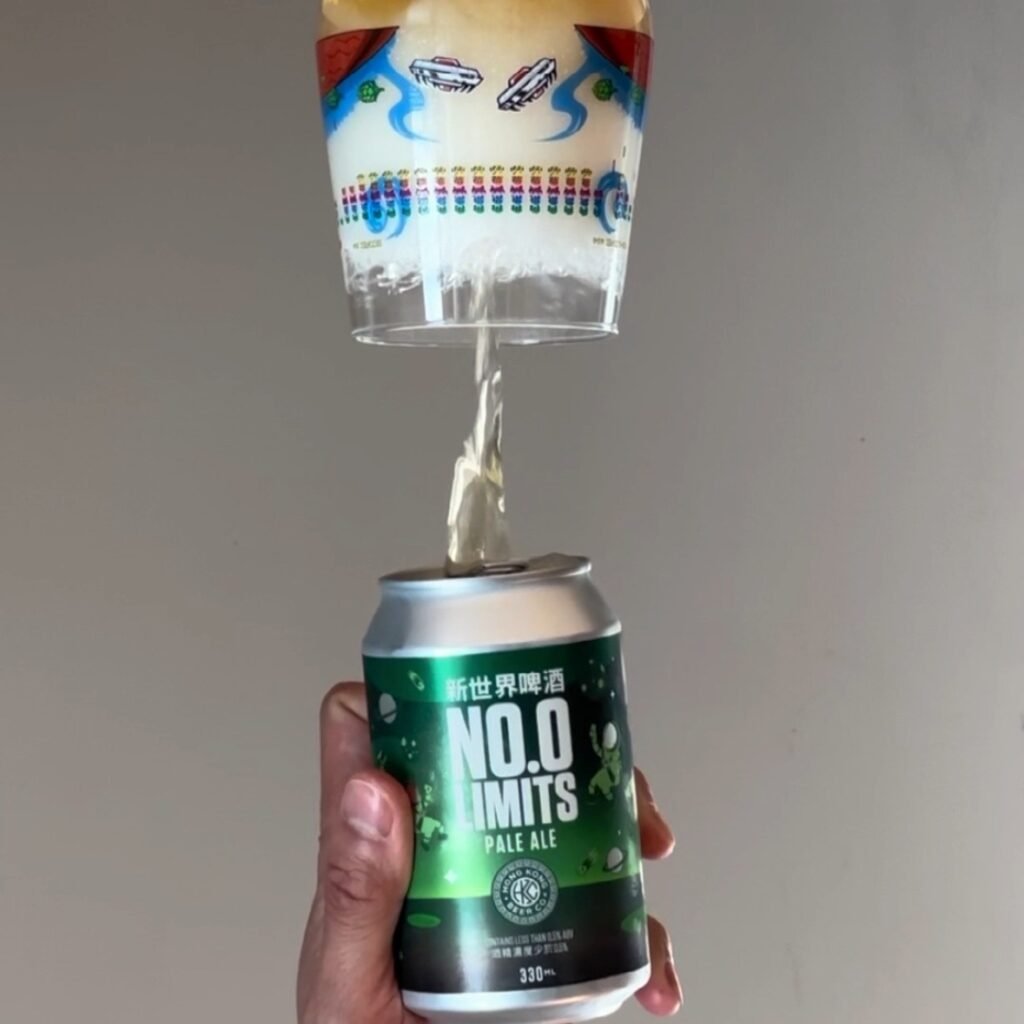
What feels like a modern triumph of wellness culture is actually a rapidly expanding market driven by changing consumer habits. However, the exact definition of this buzz-free brew varies globally. In the United States, “non-alcoholic” or “near beer” can contain less than 0.5% ABV, while “alcohol-free” or “dealcoholized” options must undergo rigorous verification to prove they contain no detectable alcohol, registering below 0.05% ABV.
The definition of non-alcoholic beer in Asia varies significantly by local regulation and market practices. In Japan, while anything under 1.0% ABV is legally a soft drink, strict industry self-regulation reserves the “non-alcoholic” label exclusively for absolute 0.00% ABV products. Meanwhile, China and Taiwan both set their legal threshold for non-alcoholic beer at 0.5% ABV or less, with Taiwan officially categorizing these low-ABV drinks as standard food products rather than liquor. Hong Kong operates under the most relaxed legal framework, only defining beverages above 1.2% ABV as intoxicating liquor, though its commercial market typically aligns with the global 0.5% ABV standard for non-alcoholic branding.
This quest for a low-alcohol alternative stretches back centuries. In medieval Europe, society routinely consumed “small beer”, a low-ABV beverage prized less for sobriety and more for its dense nutritional value, earning it the nickname “liquid bread.”
The blueprint for modern non-alcoholic beer, however, was forged in the legal fires of American Prohibition. When the National Prohibition Act of 1919 capped legal beverage content at 0.5% ABV, major breweries faced an existential crisis. To survive, industry giants pivoted to producing “near beer” by stripping alcohol from cereal beverages. Unfortunately, early technology couldn’t match the brewers’ hopes, and once bootlegging and speakeasies proliferated, the original non-alcoholic market tanked.
Some beer geeks often argue that beer without alcohol shouldn’t exist, but crafting a compelling non-alcoholic beer actually requires far more scientific effort and specialized equipment than brewing a traditional pint.
The evolution of its production is a fascinating journey from crude kitchen science to high-tech molecular manipulation. In the early twentieth century, brewers relied on thermal distillation, simply boiling regular beer until the alcohol evaporated. While this was a straightforward way to hit legal limits using existing equipment, the intense heat essentially cooked the beer, destroying delicate hop aromas and leaving behind a flat, caramelized liquid that failed to satisfy consumers.
To bypass the devastating effects of heat, historical brewers pivoted to arrested fermentation. Instead of removing alcohol after the fact, they rapidly chilled the liquid just as the yeast began its work, stopping the fermentation process early. This approach yielded a much fresher flavor profile and retained the crispness of real beer without requiring expensive machinery. The catastrophic downside, however, was that because the yeast was halted before consuming the grain sugars, the final drink retained a heavy, unfermented “worty” taste. It was frequently criticized for being cloyingly sweet, syrupy, and entirely lacking the complex depth of a fully matured brew.
The modern era revolutionized production by introducing vacuum distillation, which fundamentally fixed the flaws of traditional boiling. By lowering the atmospheric pressure inside the distillation chamber, the boiling point of alcohol drops significantly, allowing it to evaporate at much cooler, gentler temperatures that preserve flavor. Yet, even at lower temperatures, some volatile aroma compounds still escape, and the necessary equipment remains incredibly expensive.
For the absolute pinnacle of flavor preservation, modern craft producers rely on reverse osmosis, a sophisticated membrane filtration technique. This process forces beer under high pressure through a microscopic mesh, completely separating the alcohol and water from the flavor, color, and body compounds. The alcohol is then distilled out of the water, and the pristine water is reunited with the flavor concentrate. While reverse osmosis delivers a non-alcoholic beer virtually indistinguishable from its full-strength counterpart, the machinery is highly technical, water-intensive, and too costly for most smaller breweries.
Recently, the frontier of production has shifted from mechanical separation to biology through the use of specialized yeast strains. Modern brewers are utilizing unique, non-maltose-fermenting commercial strains like LalBrew® LoNa™, SafBrew™ LA-01, and WLP618 NA All Day® to naturally generate authentic beer flavors and esters while staying below 0.5% ABV. This biological approach offers incredible sustainability and cost-efficiency because it allows breweries to use their standard, existing equipment without investing in massive filtration systems.
However, it demands strict microbiological control to prevent off-flavors or cross-contamination. Furthermore, if the original gravity of the wort is too high, certain strains can accidentally breach the 0.5% ABV limit, requiring brewers to design their recipes with extreme precision, which can ultimately impact the beer’s final mouthfeel.
Brewing a truly exceptional non-alcoholic beer remains one of the toughest challenges in food science because ethanol is not just a byproduct of fermentation; it is the structural backbone of a beer’s entire sensory profile. In a standard pint, alcohol acts as a powerful volatile solvent, binding to aromatic compounds from hops and malt and lifting them into the air to greet the drinker’s nose. Beyond driving aroma, alcohol provides a subtle warmth and sweetness that balances heavy hop bitterness and roasted malts, while dictating mouthfeel by adding crucial viscosity and density.
When you strip alcohol from the equation, this intricate chemical matrix shatters. Without ethanol, volatile hop oils remain trapped in the liquid, causing the aroma to fall flat. The flavor profile undergoes a jarring shift toward a cloying sweetness or a harsh, metallic astringency, while the sudden loss of viscosity leaves the mouthfeel feeling hollow, thin, and watery, resembling cold, unfermented hop tea rather than a robust brew.
To overcome these formidable hurdles, modern brewers must essentially re-engineer the entire brewing process from scratch using a clever suite of physical and recipe workarounds. To simulate the missing body, they heavily modify their grain bills with high-protein grains like oats, wheat, or rye, and introduce unfermentable sugars like maltodextrin or lactose to artificially replicate the missing viscosity on the palate.
To salvage the aroma, they employ advanced dry-hopping techniques or use concentrated hop oils that can punch through the liquid without needing alcohol as a solvent. Finally, they meticulously adjust the water chemistry and increase acidity to mimic the crisp, clean finish of a standard brew.
Beyond the flavor profile, preservation poses an entirely separate, high-stakes challenge. Traditional beer relies on ethanol as a natural antimicrobial shield for long-term stability. Removing it leaves behind a vulnerable liquid packed with unfermented sugars and nutrients, a pristine breeding ground for spoilage organisms. A single stray microbe can trigger secondary fermentation inside the package, leading to ruined flavors, intense pressure buildup, or dangerously exploding cans.
Consequently, brewers must treat the packaging process with the meticulous care of a pharmaceutical lab rather than a traditional brewhouse. They employ rigorous intervention strategies like tunnel pasteurization to flash-sterilize the product inside the container, or introduce strict chemical stabilizers and precise acidification to keep the pH low enough to deter dangerous pathogens.
Because brewing a high-quality non-alcoholic beer is such an arduous scientific tightrope walk, the industry has increasingly begun to honor and validate the best of them. Developed by the AFicioNAdo™ Certification Program in 2022, the AFNA Beer Certified™ designation now trains professionals in production methods, sensory evaluation, and hospitality service specifically for non-alcoholic beer. Simultaneously, major international contests like the International Non-Alcoholic Competition and the World Alcohol-Free Awards blind-judge commercial alcohol-free beers alongside ready-to-drink (RTD) cocktails and wines.
Most recently, the renowned Brazilian International Beer Awards launched BBA ZERO, an international competition dedicated exclusively to recognizing and strengthening this booming segment. The competition utilizes specialized alcohol-free beer style guidelines developed by German hall-of-fame beer judge Markus Raupach.
For modern breweries navigating the sober-curious movement, a well-crafted non-alcoholic beer is no longer just a nice novelty to have on the menu, it is an absolute must-have to bridge the gap with evolving consumer trends.